Showing posts with label police. Show all posts

Thursday, August 1, 2019

Secret New Zealand state abuse lists


‘Potentially hundreds’ of accused named
  • The New Zealand Herald   1 Aug 2019  David Fisher investigations


At least two government departments have drawn up secret lists containing the names of people accused of abusing children in state care over 50 years.
The lists contain “potentially hundreds of names”, according to a source familiar with the process, and were drawn up partly to identify individuals accused of multiple sexual violations at different children’s homes.
However, the lists have not been given to the police or the Royal Commission into state and faith-based abuse, because of court action sparked by concerns over privacy and possible retaliation against those who named them.
The Government, which argues it should be allowed to forward such information, has won the right to have the issue heard at the Court of Appeal.
The Royal Commission has forecast using its powers under the Inquiries Act to gain access and is understood to be exploring other ways to obtain the information.
Names of alleged abusers were compiled by Ministry of Social Development and Ministry of Education researchers investigating claims of historic abuse in state-run institutions from 1950 to 1999, the period the Royal Commission was set up to investigate.
The details would prove a valuable
investigative resource to the commission and probably also to the police, who are carrying out new investigations into abuse alleged by children in state care.
Former state wards interviewed by the Herald have spoken of individual staff members alleged to have abused children in care who were later encountered at other institutions, where they went on to abuse others.
“They shifted perpetrators from one place to another,” said former state ward Tyrone Marks, who is on the Royal Commission’s Survivor Advisory Group. “It left the paedophiles to continue to do their stuff. And when they caught them again, they sent them to some other home.”
The Herald learned the highly confidential lists of completed claims containing names of alleged abusers were compiled at the Ministry of Social Development and the Ministry of Education. It is believed other agencies — such as the Ministry of Health — have undertaken similar work.
Someone familiar with the process said names were compiled as claims of historic abuse were researched.
“You want to know if there are allegations against someone by a number of people,” said the person. “It doesn’t mean an allegation has been proved, just the allegation has been made.”
Databases across the agencies
involved in claims of historic abuse in state care held “potentially hundreds of names”, said the source.
University of Auckland senior lecturer Dr Stephen Winter researched the claims process at the Ministry of Social Development and wrote in an academic paper published last year: “The ministry . . . has a database of settlements with information about particular complaints and offenders . . . (and was) able to make ‘similar fact’ assessments in some cases.”
Ministry of Social Development deputy chief executive Stephen Crombie confirmed it held names of those who worked in state institutions who were alleged to have abused children, emotionally, physically and sexually. He said police had approached MSD for information on specific people and where possible details had been provided.
Ministry of Education deputy secretary Katrina Casey also confirmed her ministry had recorded names of those alleged to have carried out abuse as part of its historic claims process.
She said the information had not been passed to the Royal Commission, although information was provided to police when there were safety concerns and when it did not breach the existing High Court orders. Both ministries emphasised that the documents they held were lists of settlement claims which included the names of alleged abusers, and other information.
Before late 2018, Crombie said MSD had told police of physical and sexual abuse allegations in response to requests. But a High Court decision halted the practice, blocking government departments from providing police with court documents from historic claims proceedings — or the allegations in the documents — without the court’s permission or claimants’ consent.
Justice Rebecca Ellis blocked government departments from passing details to police after a “failure of process” saw statements of claim filed with the court passed on to detectives without permission or even claimants being told first. Those claimants had raised concerns about “deeply personal and intimate events” being shared without their permission, and fear of retribution — including concerns by serving inmates it would leave family members vulnerable.

Lawyer Sonja Cooper, whose firm acted for the people whose details were passed to police without permission, said it would be helpful for the Royal Commission to have access to “any material held by the ministries which catalogues perpetrators of abuse”.

Wednesday, July 10, 2019

The NZ Govt Lake Alice Cover Up

 The Cover Up of All Cover Up's STATE ABUSE
Very long read, but a must read 
Aaron Smale is a freelance journalist and photographer who has worked for Radio NZ, The Nation, Mana, North & South, NZ Geographic, Al Jazeera and The Spinoff. Twitter: @ikon_media
Lake Alice
A little historical digression is in order to give some context.
In the late 1990s, a class action suit was taken against the Crown on behalf of more than 40 former patients of the adolescent unit of Lake Alice Psychiatric Hospital. The adolescent unit ran from 1972 until 1977 and has all the hallmarks of a barbaric experiment. The claim made allegations of serious abuse, including rape and sexual abuse by both staff and adult patients (many of whom were criminally insane), torture through the use of electric convulsive therapy, serious assault, illegal detention and other serious crimes.
When Labour came into government in 1999 (there’s that date), Helen Clark and Annette King promised to make things better and eventually the Crown settled by paying out $10 million.
In the process, they explicitly acknowledged the truth of the allegations. Helen Clark’s letter of apology to victims, counter-signed by Health Minister Annette King, said: “What happened to you in the Child and Adolescent Unit at Lake Alice was unacceptable. What occurred to children there should not have happened. We very much regret that it did.”
The apology and payout were supposed to make it all go away. It didn’t. The second batch of former patients also made a claim and was also paid out.
To complicate matters further, High Court judge Sir Rodney Gallen was asked to assess how the payment should be divvied out for the first group of claimants. Strangely, that was all he was asked to do. But being a man of some curiosity and integrity, he asked to speak to the claimants and also examined documents and other evidence.
He was so horrified by what he heard and saw that he felt compelled to write a report, which was then duly leaked and which the government fought in court, unsuccessfully, to prevent the media quoting from.
Gallen’s report was stark and unequivocal. In a particularly telling line, he described what he had discovered as “outrageous in the extreme.” He stated bluntly that the allegations of sexual abuse were not merely allegations but, in his view, had indeed happened. He arrived at the same conclusion on the other allegations. To paraphrase, the state was guilty of running a den of torture and abuse.
Police and Crown Law
The allegations were then the subject of police complaints, which involved more than 40 former patients (this number later grew). For reasons yet to be explained, the police failed to interview these complainants. After dawdling for around eight years they finally announced there was not enough evidence to prosecute, demonstrating a blatant example of willful blindness.
All this despite a High Court judge finding conclusive evidence of serious crimes against children; despite Helen Clark acknowledging in a formal letter that it did happen; despite this legal opinion not being based on any serious examination of the evidence; despite the UN repeatedly asking why the Lake Alice allegations had not been properly investigated (ironically it was still asking this when Helen Clark was applying for the top job).
So who instructed the police to not do their job? Was there any political interference? Sorry, the Royal Commission can’t answer those questions because it can’t ask them. Post-1999 you see.
While the police were busy not doing their job, Crown Law was very busy doing theirs. Officials advising government ministers as far back as 1998 were ringing alarm bells. Not only was the government at risk of serious liability for what happened at Lake Alice, but there were also other institutions that had come to their attention.
Most of the Lake Alice claimants were wards of the state and had been through other institutions – Kohitere, Holdsworth, Hokio Beach, Owairaka and the like – which were under the Department of Social Welfare. They had made similar allegations about those institutions. Lake Alice was simply a Pandora’s Box that officials wanted to keep a lid on. In documents going back as far as last century officials were flagging the potential liability.
Keeping the lid on
In the first story I did on state abuse in 2016 I spoke to Ros Noonan, the previous Chief Human Rights Commissioner. Among other things she told me that when the Lake Alice issue arose previous Attorney-General Margaret Wilson came under pressure from Crown Law officials to “shut it down”.
Margaret Wilson has refused to give an interview on this.
But what I have been told is that she tried to resist the pressure of her own officials and was inclined to deal with Lake Alice in a more open and transparent way. It appears she ran into opposition from her fellow Labour MPs, particularly Helen Clark and Annette King, who did not want such an investigation into what happened and why.
The upshot of all this was Crown Law got its way. It devised and carried out a legal strategy that used all technical legal defences to defeat claims by those who had been abused in state institutions. That strategy has not been revoked.
This might sound dry and technical but it has had some ugly consequences and inflicted further harm on people who have already suffered terrible abuse. I have seen some spectacularly immoral arguments that were put forward in our courts by Crown Law (paid for by you, the taxpayer) to defend the indefensible. These attitudes have permeated the whole state apparatus dealing with these claims. These attitudes started at the top.
And it is this attitude that has meant the redress scheme the government has persisted with has been grossly unfair. It has left a festering sore that is one of the main reasons there was a need for a Royal Commission in the first place.
I’ve yet to pin down all the details of how this happened and how it played out because I’ve been constantly refused access to relevant documents under the guise of legal privilege, despite the Lake Alice case being done and dusted (there are a litany of other bullshit excuses that are too dreary to repeat).
But it is clear that at some point this legal strategy was signed off at the highest levels of Government.
Helen Clark must have been in the loop and had oversight – she was in charge.It wasn’t a trivial matter as it had major fiscal and political implications. Michael Cullen was most definitely involved after Margaret Wilson was shifted sideways into the Speaker’s role and he took over as Attorney General (just to be even-handed, this strategy was vigorously pursued without significant deviation by John Key’s National-led government, particularly by Attorney General Chris Finlayson and Ministers for MSD, Paula Bennett and Anne Tolley).
Who was involved in those discussions and what were their decisions around how to respond to victims of abuse at the hands of the state? Well, the Royal Commission won’t be able to find out because the 1999 cut-off date prevents it from asking those questions.
More questions
Here some further questions I’ve been trying to get answers to.
What part did Peter Hughes (currently the State Services Commissioner) play when he was boss of MSD in the 2000s? What advice was he giving the minister and what instructions was he giving to his staff about how to handle claims of abuse by wards of the state?
Again, I’ve had endless difficulty getting answers. But MSD’s behaviour gives some clues – it has hired private investigators and top QCs to bulldoze victims into the ground in a court of law. Or if you wanted to avoid being shredded by a QC, you could accept a lowball offer.
But the Royal Commission is currently blocked from investigating Mr Hughes’ decisions and actions.
I’d also be interested to know what role Una Jagose (currently Solicitor General) played in Crown Law’s response to state abuse. I’ve seen a letter where she dismissed a victim’s claim out of hand in her role as a Crown lawyer, despite Crown Law knowing the alleged perpetrator had previous convictions for sexually abusing children. Some of those offences happened at Epuni Boys Home, where the claimant had been a resident.
Was this part of a deliberate strategy of denial, even in the face of clear evidence, knowing the invasive nature of a court trial would be too traumatic for many victims to face? That evidence, ironically, led to further police charges and court convictions against the same perpetrator.
Technically the Royal Commission won’t be able to explore these questions because they happened after 1999. Out of scope, in bureaucratic parlance.
That date
If that date stands, the Royal Commission will be able to do less than I can as an individual journalist. At least I can ask those questions. On the face of it, the Royal Commission is being prevented from even doing that.
If I am wrong and the government and public servants have nothing to hide, why don’t they simply remove the cut-off date of 1999 and let the Royal Commission have a look at what happened over the past two decades? Why is Ardern and her government clinging so stubbornly to the 1999 cut-off date when so many experts have made submissions asking for its removal? Why is a Royal Commission of Inquiry into state abuse not being allowed to investigate the state’s response to that abuse when victims started to talk about it, which largely happened after 1999?
It makes no sense, especially when it can take decades for victims of sexual abuse to come forward. Many victims of state abuse when they finally mustered the courage to speak up were told by Crown Law in cold legal language that they were lying, adding further distress. Who authorised that? We won’t find out under the Royal Commission’s current terms of reference.
In a previous piece, I wrote I characterised the state as a psychopath – completely lacking in remorse or empathy, manipulative, narcissistic, no insight into their offending, a high risk of reoffending, etc. In its handling of state abuse, I argued that the New Zealand state is a textbook case of a psychopath.
And yet again that diagnosis is proving to be frighteningly accurate.
Justice Gallen got it right. The abuse that occurred in places like Lake Alice was “outrageous in the extreme.” But so is the state’s cover-up over the past 20 years.If the Royal Commission can’t examine that cover-up, it will simply be another chapter in it.
It won’t be a Royal Commission. It will be a Royal Omission.
Newsroom is powered by the generosity of readers like you, who support our
mission to produce fearless, independent and provocative journalism.
Comments
Newsroom does not allow comments directly on this website. We invite all readers who wish to discuss a story or leave a comment to visit us on Twitter or Facebook. We also welcome your news tips and feedback via email: contact@newsroom.co.nz. Thank you


Tuesday, April 2, 2019

Justice

If anyone following my blog wants to talk to a reporter gathering evidence on Dr. Selwyn Leeks and his actions in New Zealand and Australia please comment to get in touch 

Wednesday, March 27, 2019

THE PM HAS NO EMPATHY FOR TORTURED CHILDREN


New Zealand Govt tortured boys and girls as young as 4 with #ECT to body parts while awake and screaming and sets crown law on survivors to prevent them from getting rehab and compo.
https://www.newshub.co.nz/home/new-zealand/2017/12/un-involved-in-
manawatu-abuse-investigation.html


https://kiwijustice2blog.wordpress.com/2018/03/27/sir-rodney-gallens-report-on-the-rape-drugging-and-torture-of-nz-children/


Monday, November 26, 2018

The Big Lake Alice Cover-up


Prime Minister Jacinda Ardern, children's minister Tracey Martin and chair of the Royal Commission Sir Anand Satyanan announce the extension into church care of children. Photo: Lynn Grieveson
Aaron Smale

Aaron Smale is a freelance journalist and photographer who has worked for Radio NZ, The Nation, Mana, North & South, NZ Geographic, Al Jazeera and The Spinoff. Twitter: @ikon_media

Lake Alice

A little historical digression is in order to give some context.
In the late 1990s, a class action suit was taken against the Crown on behalf of more than 40 former patients of the adolescent unit of Lake Alice Psychiatric Hospital. The adolescent unit ran from 1972 until 1977 and has all the hallmarks of a barbaric experiment. The claim made allegations of serious abuse, including rape and sexual abuse by both staff and adult patients (many of whom were criminally insane), torture through the use of electric convulsive therapy, serious assault, illegal detention and other serious crimes.
When Labour came into government in 1999 (there’s that date), Helen Clark and Annette King promised to make things better and eventually the Crown settled by paying out $10 million.
In the process, they explicitly acknowledged the truth of the allegations. Helen Clark’s letter of apology to victims, counter-signed by Health Minister Annette King, said: “What happened to you in the Child and Adolescent Unit at Lake Alice was unacceptable. What occurred to children there should not have happened. We very much regret that it did.”
The apology and payout were supposed to make it all go away. It didn’t. The second batch of former patients also made a claim and was also paid out.
To complicate matters further, High Court judge Sir Rodney Gallen was asked to assess how the payment should be divvied out for the first group of claimants. Strangely, that was all he was asked to do. But being a man of some curiosity and integrity, he asked to speak to the claimants and also examined documents and other evidence.
He was so horrified by what he heard and saw that he felt compelled to write a report, which was then duly leaked and which the government fought in court, unsuccessfully, to prevent the media quoting from.
Gallen’s report was stark and unequivocal. In a particularly telling line, he described what he had discovered as “outrageous in the extreme.” He stated bluntly that the allegations of sexual abuse were not merely allegations but, in his view, had indeed happened. He arrived at the same conclusion on the other allegations. To paraphrase, the state was guilty of running a den of torture and abuse.

Police and Crown Law
The allegations were then the subject of police complaints, which involved more than 40 former patients (this number later grew). For reasons yet to be explained, the police failed to interview these complainants. After dawdling for around eight years they finally announced there was not enough evidence to prosecute, demonstrating a blatant example of willful blindness.
All this despite a High Court judge finding conclusive evidence of serious crimes against children; despite Helen Clark acknowledging in a formal letter that it did happen; despite this legal opinion not being based on any serious examination of the evidence; despite the UN repeatedly asking why the Lake Alice allegations had not been properly investigated (ironically it was still asking this when Helen Clark was applying for the top job).
So who instructed the police to not do their job? Was there any political interference? Sorry, the Royal Commission can’t answer those questions because it can’t ask them. Post-1999 you see.
While the police were busy not doing their job, Crown Law was very busy doing theirs. Officials advising government ministers as far back as 1998 were ringing alarm bells. Not only was the government at risk of serious liability for what happened at Lake Alice, but there were also other institutions that had come to their attention.
Most of the Lake Alice claimants were wards of the state and had been through other institutions – Kohitere, Holdsworth, Hokio Beach, Owairaka and the like – which were under the Department of Social Welfare. They had made similar allegations about those institutions. Lake Alice was simply a Pandora’s Box that officials wanted to keep a lid on. In documents going back as far as last century officials were flagging the potential liability.
Keeping the lid on
In the first story I did on state abuse in 2016 I spoke to Ros Noonan, the previous Chief Human Rights Commissioner. Among other things she told me that when the Lake Alice issue arose previous Attorney-General Margaret Wilson came under pressure from Crown Law officials to “shut it down”.
Margaret Wilson has refused to give an interview on this.
But what I have been told is that she tried to resist the pressure of her own officials and was inclined to deal with Lake Alice in a more open and transparent way. It appears she ran into opposition from her fellow Labour MPs, particularly Helen Clark and Annette King, who did not want such an investigation into what happened and why.
The upshot of all this was Crown Law got its way. It devised and carried out a legal strategy that used all technical legal defences to defeat claims by those who had been abused in state institutions. That strategy has not been revoked.
This might sound dry and technical but it has had some ugly consequences and inflicted further harm on people who have already suffered terrible abuse. I have seen some spectacularly immoral arguments that were put forward in our courts by Crown Law (paid for by you, the taxpayer) to defend the indefensible. These attitudes have permeated the whole state apparatus dealing with these claims. These attitudes started at the top.
And it is this attitude that has meant the redress scheme the government has persisted with has been grossly unfair. It has left a festering sore that is one of the main reasons there was a need for a Royal Commission in the first place.
I’ve yet to pin down all the details of how this happened and how it played out because I’ve been constantly refused access to relevant documents under the guise of legal privilege, despite the Lake Alice case being done and dusted (there are a litany of other bullshit excuses that are too dreary to repeat).
But it is clear that at some point this legal strategy was signed off at the highest levels of Government.
Helen Clark must have been in the loop and had oversight – she was in charge.It wasn’t a trivial matter as it had major fiscal and political implications. Michael Cullen was most definitely involved after Margaret Wilson was shifted sideways into the Speaker’s role and he took over as Attorney General (just to be even-handed, this strategy was vigorously pursued without significant deviation by John Key’s National-led government, particularly by Attorney General Chris Finlayson and Ministers for MSD, Paula Bennett and Anne Tolley).

Who was involved in those discussions and what were their decisions around how to respond to victims of abuse at the hands of the state? Well, the Royal Commission won’t be able to find out because the 1999 cut-off date prevents it from asking those questions.
More questions
Here some further questions I’ve been trying to get answers to.
What part did Peter Hughes (currently the State Services Commissioner) play when he was boss of MSD in the 2000s? What advice was he giving the minister and what instructions was he giving to his staff about how to handle claims of abuse by wards of the state?
Again, I’ve had endless difficulty getting answers. But MSD’s behaviour gives some clues – it has hired private investigators and top QCs to bulldoze victims into the ground in a court of law. Or if you wanted to avoid being shredded by a QC, you could accept a lowball offer.
But the Royal Commission is currently blocked from investigating Mr Hughes’ decisions and actions.
I’d also be interested to know what role Una Jagose (currently Solicitor General) played in Crown Law’s response to state abuse. I’ve seen a letter where she dismissed a victim’s claim out of hand in her role as a Crown lawyer, despite Crown Law knowing the alleged perpetrator had previous convictions for sexually abusing children. Some of those offences happened at Epuni Boys Home, where the claimant had been a resident.
Was this part of a deliberate strategy of denial, even in the face of clear evidence, knowing the invasive nature of a court trial would be too traumatic for many victims to face? That evidence, ironically, led to further police charges and court convictions against the same perpetrator.
Technically the Royal Commission won’t be able to explore these questions because they happened after 1999. Out of scope, in bureaucratic parlance.
That date
If that date stands, the Royal Commission will be able to do less than I can as an individual journalist. At least I can ask those questions. On the face of it, the Royal Commission is being prevented from even doing that.
If I am wrong and the government and public servants have nothing to hide, why don’t they simply remove the cut-off date of 1999 and let the Royal Commission have a look at what happened over the past two decades? Why is Ardern and her government clinging so stubbornly to the 1999 cut-off date when so many experts have made submissions asking for its removal? Why is a Royal Commission of Inquiry into state abuse not being allowed to investigate the state’s response to that abuse when victims started to talk about it, which largely happened after 1999?
It makes no sense, especially when it can take decades for victims of sexual abuse to come forward. Many victims of state abuse when they finally mustered the courage to speak up were told by Crown Law in cold legal language that they were lying, adding further distress. Who authorised that? We won’t find out under the Royal Commission’s current terms of reference.
In a previous piece, I wrote I characterised the state as a psychopath – completely lacking in remorse or empathy, manipulative, narcissistic, no insight into their offending, a high risk of reoffending, etc. In its handling of state abuse, I argued that the New Zealand state is a textbook case of a psychopath.
And yet again that diagnosis is proving to be frighteningly accurate.
Justice Gallen got it right. The abuse that occurred in places like Lake Alice was “outrageous in the extreme.” But so is the state’s cover-up over the past 20 years.If the Royal Commission can’t examine that cover-up, it will simply be another chapter in it.
It won’t be a Royal Commission. It will be a Royal Omission.
Newsroom is powered by the generosity of readers like you, who support our
mission to produce fearless, independent and provocative journalism.


Comments
Newsroom does not allow comments directly on this website. We invite all readers who wish to discuss a story or leave a comment to visit us on Twitter or Facebook. We also welcome your news tips and feedback via email: contact@newsroom.co.nz. Thank you.


https://kiwijustice2blog.wordpress.com/2018/03/27/sir-rodney-gallens-report-on-the-rape-drugging-and-torture-of-nz-children/

Thursday, November 22, 2018

Lies and cover ups and more lies by PMs MPs and state officials


says MSD redress scheme punitive to state child abuse victims next breath we will use this scheme MSD has for any redress the Royal Commission may come up with


to be clear this is where the request for A Royal Commission into institutional responses to child sexual abuse came from and not where the PM says


Then we have some very good reasons for that 1999 date as well as other dating stuff on our top officials


Backed up by this report


the list of people who have covered up the abuses at lake Alice NZ starts with Helen Clark PM, Annette King, Margaret Willson Attorney general, Michael Cullen, Chris Finlayson. Attorney General, Paula Bennett, Anne Tolley, John Key PM, several Police commissioners, and now it's looking like Jacinda Ardern will join this list


 New Zealand Govt tortured boys and girls as young as 8 with #ECT to body parts while awake and screaming and sets crown law on survivors to prevent them from getting rehab and compo. https://t.co/l87jMpC1t0

STAY TUNED MORE TO COME!!!!!!!!!

Friday, November 25, 2016

Child abuse report 'shut down by '@chrisfinlaysonMP because the abuse was so shocking it would harm the @NZNational party

A former Human Rights Commissioner is accusing the government of killing off a critical report on the way it handled hundreds of cases of children abused in state care.
The report was written when Ros Noonan was Chief Human Rights Commissioner in 2011.

Chief Human Rights Commissioner David Rutherford said he and a team of lawyers found the report's conclusions were legally flawed. Photo: 123RF
It was never published because, she says, the Attorney General Chris Finlayson did not like its recommendations.
Many children in state care between the 1950s and 1980s suffered abuse and neglect that scarred them for life.
In 2009 the UN Committee Against Torture raised concerns about how New Zealand handled historic abuse claims. In 2011 the Human Rights Commission launched a review.
Ms Noonan said the draft report recommended an independent inquiry be set up. She did not think the Ministry for Social Development was impartial enough to handle victim's complaints.
Attorney General Chris Finlayson replied in a letter that he disagreed and the ministry was fair and impartial.
Ms Noonan believed Mr Finlayson was motivated by fears an independent inquiry would expose the government to liability.
"My clear impression is that he was trying to shut down the inquiry and the report. I think, clearly, he was concerned there would be a public interest in there being an independent inquiry and the government didn't want that."
Ms Noonan, who is the director of the Human Rights Centre at Auckland University Law School, was angered by Mr Finlayson's response - and that the report was not published.
"It's infuriating and sort of puzzling. I can't see, other than the cost of compensation, how New Zealand wouldn't be better off if we knew what had happened, we were able as a society to apologise to those our system damaged and we could make sure we didn't make the same mistakes in the future."
Noonan's successor, chief Human Rights Commissioner David Rutherford, said he and a team of lawyers found the report's conclusions were legally flawed. That was why it was not published.
He said the UN Convention against Torture and Other Cruel, Inhuman or Degrading Treatment or Punishment) did not require an independent inquiry in such cases, only that the process was impartial.
The real issue to focus on was if the MSD process was impartial enough, he said.
Victims do not trust government - judge
She wanted an independent body that holds MSD accountable and can investigate historic claims.
Mr Rutherford did not disagree.
"I would listen to Carolyn Henwood's view any day of the week over anyone else who's dealt with this stuff. We are definitely of the view, and it's different from this MSD claims process, that New Zealanders need to understand what happened here."
Judge Henwood's panel, which the government intended as a temporary measure, was disestablished in 2015.
The Ministry had set up an historic abuse claims unit before CLAS started.
Judge Henwood said many victims did not trust it.
"The department is the perpetrator and also the person trying to put it right. Some people are very, very anti the department because of all the harm and the way they've been dealt with over the years. So I don't think it's satisfactory and it's still not satisfactory. I think something independent is needed."
Attorney General Chris Finlayson declined to be interviewed, but a spokesperson said in a written statement:
"In 2011 the Chief Human Rights Commissioner invited the Attorney-General, along with a range of other parties, to consult over the Commission's report on the State's response to historic claims of abuse.

"The Attorney-General raised a number of concerns he had about the quality and objectivity of the report for their consideration."


Aaron Smale Te Manu Korihi Reporter aaron.smale@radionz.co.nz


Monday, September 26, 2016

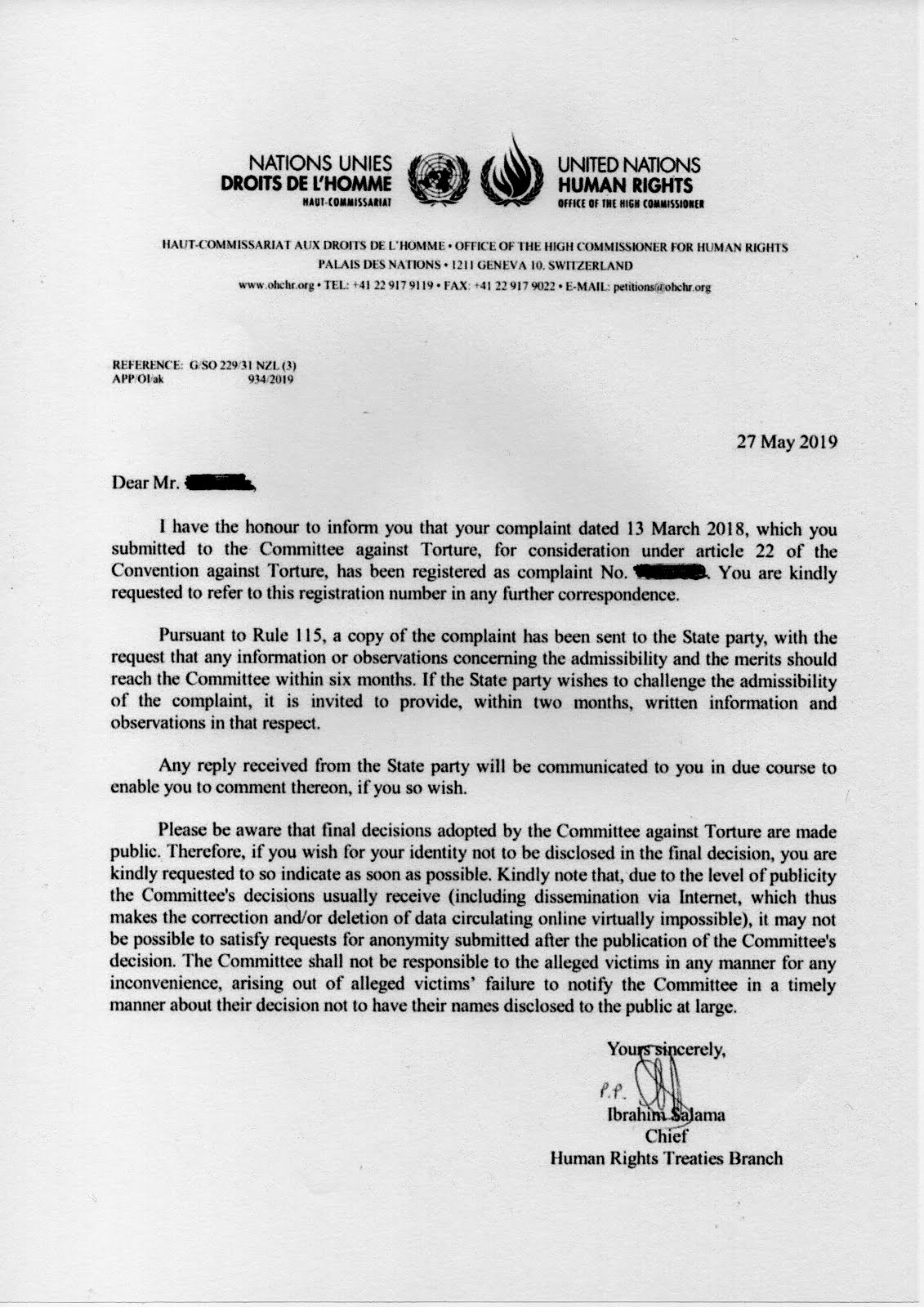
United Nations to investigate 1970s human rights abuses at New Zealand psychiatric hospital

A former patient of the notorious Lake Alice psychiatric hospital in Manawatu is looking forward to a United Nations examination of events there in the 1970s, now that police inquiries have finished.
The police have written to Survivors of Lake Alice founder Paul Zentveld and fellow ex-patients to say they have completed an investigation into allegations against former psychiatrist Selwyn Leeks and decided against any prosecution.
Assistant Commissioner Malcolm Burgess wrote that the police had found insufficient evidence to support a charge of cruelty against a child under the Crimes Act, a conclusion which he said was supported by a peer review by an independent barrister.
Although the appropriate legislation for the complaints under investigation would have been the Mental Health Act 1969, which provided a penalty of two years in prison and a fine of $1000 for ill-treating a person in care at a psychiatric hospital, Mr Burgess said any prosecution would have to have been brought within six months of an offence.
Although the assistant commissioner said the decision was "probably not the outcome you are seeking", Mr Zentveld said he was pleased that former patients could finally take a case to the United Nations.
"We've waited 38 years for the police to investigate it and finally come up with this," he said last night.
"But it's all good, because it's going to the UN now. We can act now, because the investigation had to finish before we can go onto the next stage.
All resources have to be exhausted so now the UN will get a jump in."
Auckland-based Mr Zentveld received court-ordered compensation of almost $115,000 for abuse at Lake Alice including 92 electric shock therapy (ECT) sessions over the five years after he was committed there as an 11-year-old in 1972.
He was one of 183 former patients awarded a total of $10.7 million by retired High Court judge Sir Rodney Gallen after taking civil action against the Government, and successfully sued the Crown for legal expenses originally deducted from the payout.
Mr Burgess said the police investigation - which took place between 2006 and 2009 - focused on allegations as they related to the activities of Dr Leeks, head of the hospital's child and adolescent unit before it closed in the late 1970s, who was accused by his former patients of punishing them with ECT and painful drug injection.
That was because Mr Burgess believed there was insufficient evidence from the outset for offending by other staff to be considered.
Dr Leeks, now in his early 80s, moved to Australia after his unit was closed and was ordered in 2006 by a court there to pay $55,000 in damages for sexually abusing a former patient in that country.
Mr Burgess said that even if the police had determined a prosecution could be sustained, repeated inquiries into the events at Lake Alice, a failure to establish any criminal culpability at the time, and the unavailability of witnesses through death or disability would have been grounds for an application of abuse of process.

Source: Mathew Dearnaley,  "UN to probe abuses at psychiatric hospital," New Zealand Herald, March 30, 2010.     

The police will never find evidence if they don't question the people that file complaints I filed a complaint they knew how to contact me and never did why simple too embarrassing for the Govt that simple