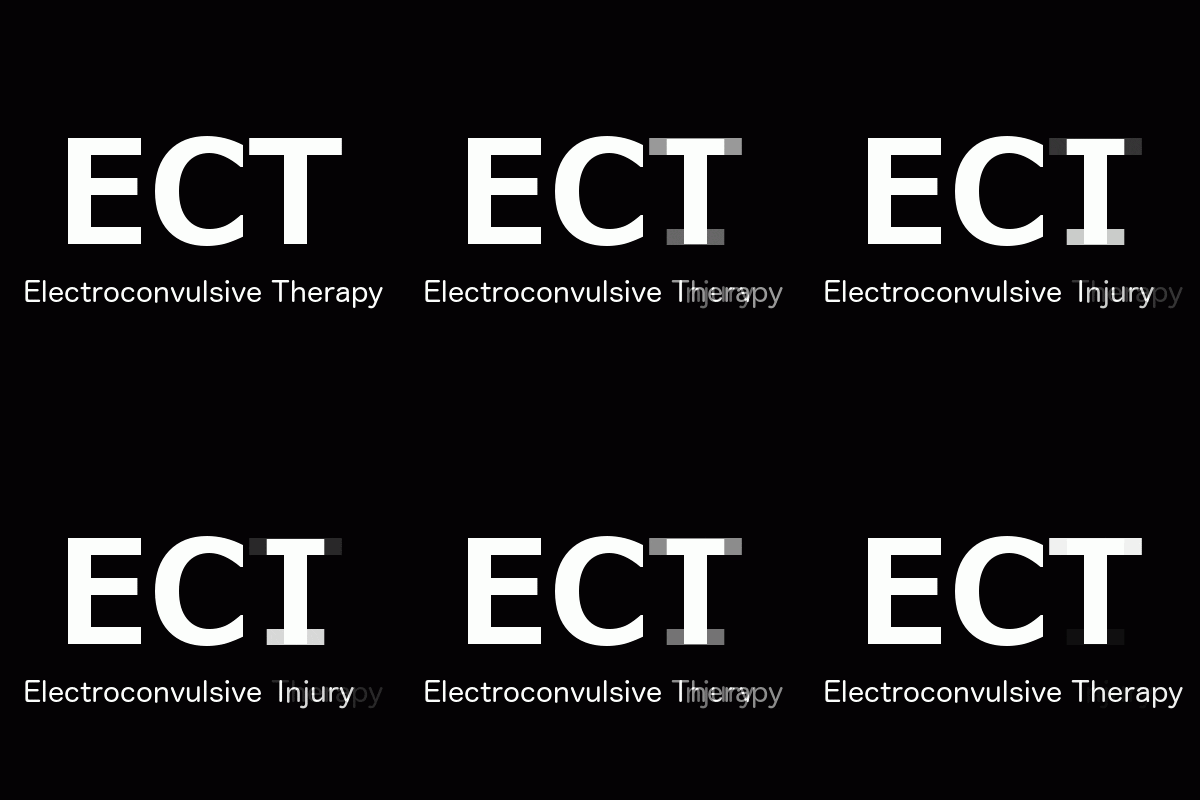
The debate surrounding ECT always gets side tracked into patients like me saying that ECT damaged them and others saying that it helped. This distracts from the real debate…. Does ECT meet the rigours of medical science required by all other treatment?
I am attempting to bring to an end the controversy that has surrounded ECT since its first use almost 80 years ago. Controversy is driven by lack of research. There is an institutional cover up by psychiatrists all over the world who have doctored research and hence misinformed their patients. This is a serious accusation to make but I hope that in this short time I can begin to show you some of these issues surrounding ECT. I have further evidence.
The psychiatrists have had 80 years to do research and is has had 13 since the release of NICE (national institute for Clinical Excellence)guidelines in 2003 to which made a recommendation that research be done to prove its safety and effectiveness. They have failed to do this. Neither has NICE held them accountable.
There is no place in 2016 for a treatment that is given based on the opinions and beliefs of doctors and on seriously flawed research evidence. A treatment should only be given if it has proved its worth in numerous good quality, reproducible research. The Royal College of Psychiatrists standards fall well below those that other specialties demand. Yesterday in Midlands today Lindsay Doyle the reporter quoted Worcester hospital as saying that Worcester ECT unit calls itself a “centre of excellence”. This means nothing without knowing what these standards are. It is misleading the public.
They have kept the amount of brain damage that ECT does under the radar because of their don’t look don’t see policies. By its own admission the Royal College of Psychiatrists says that anywhere between 10 and 50% of patients get brain damage following ECT. Any type of brain injury from ECT is a serious side effect. These should be reported using the yellow card reporting system. If the yellow card reporting system does not have thousands of reports of brain injury it means that the psychiatrists are failing to report them. By not reporting brain damage ECT is allowed to carry on; if reported I am confident that ECT would have been stopped.
I am asking for an independent review to produce a meaning full risk benefit assessment of ECT; without this patients cannot be given informed consent.
I was a hospital doctor until 2003 when I developed a severe depression. Having failed drug therapy, I was voluntarily admitted to hospital where I was given 2 courses of ECT totalling 20 shocks from 2004 to 2005. I was consented that the only side effects were those of short term memory loss, headache and risks of general anaesthetic.
By the end of the course I was clumsy and couldn’t walk in a straight line. I kept falling over and walking into door frames. My memory was so bad that I didn’t know if I had always bumped into door frames! My speech was slurred and I had severe word finding problems, and my hands shook. I could not do my 2 times tables or my children’s primary school homework. I could not use money; I had to ask shop keepers to take what they needed. It took me 5 years to be able to read again and to use a computer.
Prior to this I had been a hospital doctor capable of running a neonatal intensive care unit.
I can never work again and I still struggle on daily basis. I fought for 2 years to be seen by a brain specialist. My consultant kept attributing these symptoms to my depression and tablets. This in itself is appalling, my doctor giving ECT should know the signs of brain damage. I see myself as the lucky ECT survivor because I had enough medical knowledge to know that this was brain damage. I pushed for a referral and was eventually seen by a neuropsychologist at Worcester Hospital who diagnosed brain damage secondary to ECT. I have links with numerous global ECT victims, they have not had their brain damage recognised and cannot move on with their lives. I feel that because I am a doctor and because I have not had depression for 7 years I am a good voice for these people.
This is a quote from a patient in America “this is a very real depression I'm now experiencing as a result of having my children's memories robbed, my career stolen and life experiences deleted. They did not ask for consent to do this. One of the side effects of shock that they don't tell you before you "consent", is the worsening of the original depression due to the "adverse" effects of treatment. Who wouldn't be depressed after having a meaningful life deleted? Our lives had meaning.”
Yesterday Worcester Hospital was quoted by Midlands today as saying that it had been accredited with excellence by ECTAS (The Royal College of Psychiatrists) and is one of the leading providers in the UK. Excellence compared to what standard? The Oxford Dictionary definition of a centre of excellence is “a place where the highest standards are maintained: the hospital is a centre of excellence in research and the teaching of doctors". I believe that the Royal College Standards fall below that in many ways. Firstly that ECT machines are untested and secondly they are using a treatment that NICE in 2003 stated that there was not enough research on it. I do not believe that any other medical specialty would use a treatment with a lack of evidence and testing and one that causes so much brain damage. The machine is deemed by the FDA (federal drugs agency) as having the potential to produce damage …..and it has not been proven that the benfits outweigh the harm.
As I will demonstrate the Royal College does not practice medicine to the standards that other medical specialities in the UK are expected to reach. Today every medical treatment has to undergo rigorous testing and the results must be repeatable. ECT does not pass those tests and so by Worcester claiming that they are classed as excellent is a deception to the public.
As The Royal College ECT information sheet states ECT remains controversial. Controversy only continues because they cannot provide research evidence to defend their practises and prove their critics wrong. Their practices are based on opinion and personal views. This should not happen in 2016. Nobody is holding them accountability.
The controversy will continue until patients like myself get our cases heard and are given an apology. Psychiatrists dismiss us as “emotional” and left wing fascists, these are a few of the labels that we have been given.
In 2000 The Guardian ran an article about Pat Butterworth who had the names of 600 brain damaged patients. She was trying to sue her psychiatrist. Nothing came of this. Since when has this country ignored so many patients damaged by medical treatment? Only when they are mental health patients. Patients with brain damage do not have the ability to make complaints for years after their treatment and generally when they do they are dismissed. The trauma of battling is just too distressing and time consuming especially when you are living with a disabling bran injury.
Unlike the Royal College I am acting appropriately I am trying to get the government to hold the psychiatrists accountable for their actions and ensure patient safety.
I have evidence that over the years ECT research has been doctored to make ECT look safer and more effective than it actually is. However I will give you 3 examples that easily demonstrate the lack of science behind ECT. This evidence is in the public domain.
1. ECT was first practised in 1938. Because of its age the machine has never had to undergo the rigorous testing that is expected of all other treatments in this day and age. However in the early days of ECT the doctors using said that it worked by causing brain damage. This has been “forgotten” by psychiatrists giving ECT today. However the opponents of ECT quite rightly say that ECT causes brain injury every time it is given. ECT causes a closed brain injury. Post-mortems on animals and humans early on in the history of ECT demonstrated small bleeds in their brains. ECT machines in America are placed in class 3 – "risk of permanent damage, and no evidence to prove that the benefits outweigh the risks"
2. In 2003 NICE (National Institute of Clinical Excellence) produced the first ever national guidelines for ECT. Psychiatrists are always quick so say that NICE agreed the use of ECT. However they seem to have failed to remember that importantly NICE said that the research regarding ECT was inadequate to ensure the effectiveness of ECT and its safety. It recommended that more research was needed. The only people who can do this are the psychiatrists giving ECT. It has not been done.
3. The Royal College of Psychiatrists have an information leaflet. It is a very flawed document in that it is biased toward getting patients to have ECT and it clearly demonstrates that there is inadequate research into the safety and effectiveness of ECT. This lack of evidence means that no patient can be given a meaningful valid consent. Often ways of describing effects or side effects are described by words and no numbers are given. It is left to imagination of the patients.
At the beginning they quote that ECT is safe and effective.
Effectiveness has to take into account how many people are helped by how much and for how long. The leaflet says that anywhere between 30 and 80% of people found it helpful. The range is huge and shows that there is a lack of good evidence. Turning it the other way anywhere between 20% and 70% said it was not helpful. They quote that ECT provides short term relief but no time is given. It says that sham trials show that ECT is better than sham(placebo) ECT. These were on schizophrenic patients not depressive patients. It fails to quote 3 sham trials on DEPRESSED patients which showed that there was no difference in those patients that had ECT and those that had sham ECT. i.e. it did nothing. Many trials show that the effect lasts a few weeks and most of the benefits are lost by 3 to 4 months and by 6 months there is no advantage. If they had the evidence to prove that the effects of ECT were long term they would state it. Not stating it shows that there is not enough research on the subject.
What constitutes a safe procedure? In its first paragraph it states that ECT is safe; much later on they quote that anywhere between 10 and 50% of patients get brain damaged. This is not my definition of safe!
Going on this information supplied by the college if ECT units do not diagnose 10 to 50% of their ECT patients with brain damage then the doctors aren’t looking for it. They are practicing a “don’t look don’t see policy.” Absence of evidence is not evidence of absence. According to my psychiatrist I did not have brain damage….. it was diagnosed 2 years later by a neuropsychologist. If she couldn’t see that I had severe brain damage that is worrying.
If we use the statistics supplied by the college in their information leaflet to calculate the possible outcomes of ECT then:
The best case scenario if 100 patients are treated, 80 people get short term remission and feel it helps and 10 get permanent brain damage.
Looking at the worst case scenario if 100 people are treated 30 people find it helpful in the short term and 50 get permanent brain damage.
Looking at the unquoted sham studies if 100 people get ECT there is no benefit and anywhere between 10 and 50 people have long term brain damage.
I believe that this evidence demonstrates that ECT has not been tested enough to ensure that it is safe and effective; neither is there enough information to allow valid consent to be given. The possible outcomes vary enormously.
Without information meaningful informed consent is impossible.
What we know with absolutely certainty is that it can cause serious life changing side effects.
To be classed as an excellent unit when the standards set by the Royal College are so low is no great achievement.
We are silenced by the institutional cover up by the college of psychiatrists. They are not held accountable by any one. Until this situation is exposed people like me will continues to be churned out by the ECT units that claim “excellence”.
In all other medical practice this level of side effects would be seen as unacceptable. All doctors should report serious side effects via the yellow card reporting system. That means that common and serious side effects are monitored and the governing body intervene if there are excessive reports of side effects. Psychiatrists don’t do this, so they stay under the radar and ECT continues.
They appear to be allowed to operate outside the high standards of evidence based medicine that other specialities would never get away with.
This is the truth behind ECT an untested machine with no solid evidence. If someone hit me and gave me this level of injury it would be seen as a serious assault. The doctors hide behind their white coats and call it treatment.
Psychiatrists are still discussing the way to give ECT, what dose for how long, what wave form to use. They don’t know how it works. They just tinker with the machines to do what feels right. People demand that animal testing be stopped I ask that human testing of ECT machines be reassessed.
How much longer can this go on? Every time someone has electrodes attached to their head it is another chance that someone’s life is being electrocuted away. It is probably happening right now.
Psychiatrists are too obsessed with the unproven benefits of ECT and not the risk. In Medicine the basic concept is do no harm. If patients are depressed because of life…. they will feel worse after ECT when they can’t work and have a chronic disability.. worrying how the next bill will be paid.
Jeremy Hunt, David Cameron, NICE, the GMC or the Health Ombudsman must set up an independent review body. The psychiatrists have had 80 years and not been able to prove that ECT is an effective safe treatment, they have not lived up to the task. They quote their opinions not figures.
The review must:
· Establish an independent enquiry.
· Ensure that every patient suffering brain injury should be reported via the yellow card reporting system.
· Review patient’s notes to look for those who have undiagnosed brain injury.
· If the hospitals have failed in their duty of care to a patient this has to be admitted.
· Set up a support group and website for ECT patients.
· Ensure that patients get the support from a brain injury specialist
· Review all the available evidence on ECT. This should be started from scratch as many literature reviews have “doctored “the evidence and these incorrect conclusions get propagated as time goes on.
· More research be done.
· A risk /benefit analysis should be done
· Following this ECT is either regulated by an independent body or ECT is banned
· All psychiatrists and nurses should learn how to recognise brain damage, not just how to pass electricity through a person’s brain.
· If it continues then an accurate information sheet should be produced with meaningful statistics.
· A consent form that ensures a valid consent is produced.
· Any patient undergoing ECT should be assessed by a neuropsychologist before and during the treatment and for a minimum of 6 months after ECT.
· The Royal Psychiatrist’s should be investigated over its biased information sheet and failure to do the research that NICE asked for.
· The College should be investigated for not submitting yellow report cards.
· ECT survivors, like any other victims of mal practice in medicine should be compensated if they have been “misconsented”. consent in medicine is seen as a basic human right.
I am not asking for a ban of ECT but to get an inquiry launched as to why such an invasive therapy has evaded the strict rules of testing required buy all other treatments; that the Royal College of psychiatrists be held accountable for ensuring that, as requested by NICE in 2003, more research regarding safety and effectiveness be done.
I challenge the Royal College of psychiatrists to produce for scrutiny their evidence that shows ECT is “safe and effective”; also I challenge them to agree to do more research into ECT.
I am going to write to the GMC and report my psychiatrist for neglect and abuse. I am going to write to NICE and the Health ombudsman to raise my concerns.
I have a meeting with the hospital management on the 10th of March.
The hospital have quoted that I was treated according to NICE guidelines. I wasn’t, that is the basis of my complaint in 2010 which was rejected and my new complaint. It will be interesting to know how they will wriggle out of this one.
I believe that there is enough evidence and enough of a change in the complaints culture now to uncover this institutional malpractice which is hidden behind the title of respectability, The Royal College of Psychiatrists.
I hope this helps to explain my concerns about ECT.
Thanks for reading it. I hope you can help highlight my campaign.
If you or your child has a reaction, DO NOT rely on your doctor, nurse or anyone else to report your reaction.
Go to the Centre for Adverse Reactions Monitoring and download the vaccine reaction form. Do not JUST supply the form alone. Put together a detailed email or word document, and tell them everything that happened.
Set your email programme to deliver a receipt when the CARM website receives it, and another when the email is opened.
Ask for acknowledgement of the documents, as well as the CARM number for your case. If more than one reaction is reported (one after each of three injections) there should be three separate numbers allocated.
The Heresy of Materialistic Psychiatry: Electroconvulsive Injury (ECI): Electroconvulsive Injury
Electroconvulsive Injury (ECI)
Electroconvulsive Injury (ECI) is a specific form of Diffuse Electrical Injury (DEI) that is induced by so-called Electroconvulsive Therapy (ECT). The scientific medical literature also refers to DEI by other names, such as electric shock syndrome or post electric shock syndrome. The main difference between DEI and ECI is that ECI is rarely acknowledged by the medical community because it is purposely administered by medical personnel rather than occurring through an accident or as an acknowledged assault with possible subsequent criminal charges. Although, the assault is usually acknowledge when ECT is administered due to political and terrorist activity, which is commonly done without anaesthesia, muscle relaxant or oxygenation. However, when this type of injury is purposely administered by medical personnel, the existence of symptoms, which are the same as other diffuse electrical injuries, is usually denied and the reporting of these symptoms is sometimes even suggested as a symptom of a mental illness.
Diffuse electrical injury is often, but not always, accompanied by visible thermal damage. This rarely happens with electroconvulsive injury because conductive gel lowers skin resistance and prevents the skin from being burned by the high voltages. However, autopsy studies have shown that thermal damage is sustained to the brain. Since this is usually not possible to detect until after death, it is rarely acknowledged.
In addition to the use of conductive gel to prevent visible signs of harm, anaesthesia and muscle relaxants are used to mask the initial reaction to sustaining such an injury to the head. The anaesthesia and muscle relaxants also often raise the seizure threshold, which means even more electricity is used to induce the desired convulsion, thereby increasing the severity of the injury.
The amount of electricity used to induce an electroconvulsive injury (ECI) (i.e. 220 to 450 Volts) through electroconvulsive therapy (ECT) is above the amount of electricity reported (i.e. 110 to 240 Volts) in the majority of cases of accidental diffuse electrical injury resulting from low voltages (i.e. < 1000 Volts). The injury from ECT is often much more pronounced than other diffuse electrical injuries because the path of the electricity is directly through the brain in addition to being a larger amount of electricity.
Path related symptomatology from ECI, such as headaches and migraines, would be expected. Since the majority of persons who suffer from a diffuse electrical injury report muscle aches, muscle spasms or twitches, general fatigue, general physical weakness, and general exhaustion, this would also be expected in those who suffer from a electroconvulsive injury. Other less common symptoms reported from diffuse electrical injury, such as weight gain or loss, back problems, dizziness, lack of physical coordination, extreme physical sensitivity, sensitivity to light, excessive perspiration, excessive thirst, and particularly heart palpitations, and especially muscle cramps would be expected to be more prevalent in electroconvulsive injury due to the path of the electricity and the resulting convulsion, even though the convulsion is masked by anaesthesia and muscle relaxants.
It also seems reasonable that the following list of reported symptoms from diffuse electrical injury would be even more prevalent in such an injury sustained directly to the head, as in the administration of Electroconvulsive Therapy (ECT):
general forgetfulness
insomnia or other sleep disorders
fear of electricity
personality changes
increased emotional sensitivity
unexplained moodiness
memory loss - short term
unusual anxiety
reduced attention span/loss of concentration
lack of motivation
sexual dysfunction
easily confused
unexplained sadness
feeling of hopelessness
increased temper
nightmares
panic attacks
crying spells
inability to cope
cognitive losses (loss of reasoning skills)
lack of usual communication skills
random fears
general disorientation
aggressive behaviour
marital or family problems (that did not exist prior to injury)
memory loss - long term
fear of crowds
In addition to these symptoms that are acknowledged as related to diffuse electrical injury (DEI), persons who have sustained a electroconvulsive injury (ECI) through electroconvulsive therapy (ECT) also report a high degree of docility and being easily controlled. Since these are seen by the perpetrators of this type of assault as being some of the most beneficial effects of ECT, these symptoms are dismissed as much as the acknowledge symptoms from the same injury sustained accidentally or by an acknowledged assault. Due to being docile and easily controlled, the victims of such assaults usually remain under the medical “care” of their assailants. Although many of these assailants are completely ignorant of the serious damage they are inflicting and the medical research into diffuse electrical injury, some are well aware of the injuries they are inflicting. Please take a minute to save some people and sign our Petition · BAN THE USE OF ECT IN NZ · https://www.change.org/p/new-zealand-government-ban-the-use-of-ect-in-new-zealand?recruiter=108623255&utm_campaign=twitter_link_action_box&utm_medium=twitter&utm_source=share_petition …
9. Domestic Violence and Child Abuse—Call for Royal Commission
9.JAN LOGIE (Green) to the Prime Minister: Does he stand by his reported comments that the Government would need to seek advice before deciding whether a Royal Commission into domestic violence and child abuse, which Owen Glenn has offered to fund, was necessary?
Rt Hon JOHN KEY (Prime Minister): I stand by my actual response to the question, which was “We need to consider all of the issues of what might come out of the royal commission.” That is something I have not taken advice on yet.
Jan Logie: Why does the green paper not deal directly with domestic violence, given that every year police attend 73,000 domestic violence call-outs, and report that 70 percent of these cases also involve child abuse?
Rt Hon JOHN KEY: I think if the member wants a very detailed answer, she really should put the question down to the Minister for Social Development. But what I can say is that the green paper on vulnerable children actually tangentially deals with that issue, because, by definition, vulnerable children are often subject to domestic violence.
Jan Logie: How can he tell this House that the Government is serious about domestic violence, when it has recently closed the family violence unit in the Ministry of Social Development, cut funding to domestic violence education programmes, and reduced funding for the family violence sector to a state of chaos?
Rt Hon JOHN KEY: Firstly, I reject the statements made by the member. I would not even put them as questions; I really would put them as statements. But let me just say this: in terms of the work we have undertaken in 2012 alone, the white paper on vulnerable children, which will be released later this year, has had over 10,000 submissions, which we will be looking closely at. The Health Committee has initiated an inquiry into preventing child abuse and improving children’s health outcomes. Obviously, there is the ministerial committee that is being led and co-chaired by Bill English and Tariana Turia, and there is an Expert Advisory Group on Solutions to Child Poverty. They are examples of just some of the background work we are doing that is informing the policies that the Government has been operating.
Jan Logie: Given all the international evidence indicates—as well as our local police statistics indicate—a direct link between domestic violence and child abuse, given the evident severity of this problem in New Zealand, which is getting worse, and given the evident poor institutional response, how can the Prime Minister not commit to support an inquiry to find a long-term, sustainable solution to domestic violence, including child abuse?
Rt Hon JOHN KEY: I think we take issue with the statement by the member that it is getting worse. The information we have is it is probably levelling off. In terms of the work the Government has been doing, there are many, many strands of that. But if the purpose of the member’s question is to ask whether the Government supports Owen Glenn using part of the very generous $80 million donation he has made to fund a royal commission of inquiry, then the answer to that is, no, we do not support that. The reason for that is that it is my own view that that is an incredibly generous act from Owen Glenn, but he would be better to spend the money on on-the-ground solutions within at-risk communities, because, frankly, this country has had a lot of inquiries over the last decade, and we need to move towards some practical solutions. He should use his money for that.
Jacinda Ardern: Does he agree, then, that the inquiry into the determinants of well-being for Māori children by the Māori Affairs Committee, the inquiry into preventing child abuse and improving children’s health outcomes by the Health Committee, the Expert Advisory Group on Solutions to Child Poverty—the Children’s Commissioner’s expert’s group—and the green paper process on vulnerable children mean we have the evidence we need, but the issue lies in the Minister allocating in the Budget a mere $6 million to respond to all of this work?
Rt Hon JOHN KEY: No. What I think is that there are a variety of different strands of information gathering and inquiring going on. And, frankly, having another one is probably not going to take us very far. This country has an issue when it comes to domestic violence, it has an issue when it comes to child abuse, but, actually, if Owen Glenn wants to spend $80 million—and it is an incredibly generous donation—I think if he went out to South Auckland and spent that money on the ground, in that community, he would make a bigger difference.
People who were abused while in state care say they feel under pressure to accept fast-track compensation offers, for fear of receiving nothing.
Photo: 123RF
The Ministry of Social Development is offering historical claimants the option to have their abuse claims settled on face value, and after some fact-checking they will be paid out and offered an apology.
Eighty percent of people offered a fast-track offer so far have accepted it.
One woman, who wanted to be known as Debs, was abused in foster care as a child.
She lodged a compensation claim with the Ministry of Social Development nine years ago and this year was offered $5000 under the fast-track system.
"When the mail came through and I opened it and read it was $5000, I was gutted, and refused to take it. My life is worth more than five grand after what I went through."
Debs said she was low on money so took the offer, but that was partly because she worried that, if she did not, she could end up with nothing.
Her payment was one of the 401 fast-track offers made so far. Of those, there have been 307 payouts totalling nearly $5.8m.
Daryl Brougham said he put in his claim in 2011 for abuse suffered from when he was aged from three months to 18 years old.
He accepted an offer of $70,000 this year - which he said barely covered the medical bills caused by the abuse.
Mr Brougham said when he started talking about his payout, others told him of their much lower fast-track offers.
"Emails of people saying: 'Daryl, I did that too and I was only offered $2000, $5000, $7000'.
"And a lot of them come back to me and say 'Daryl, I took it, because that was the only option I had. I couldn't afford a lawyer and what else am I supposed to do?'"
Minister of Social Development Anne Tolley said it would be "disappointing" if people felt pressured.
Photo: RNZ
The Labour Party's justice spokesperson, Jacinda Ardern, said the fast-track offers she had seen left the impression the claimants could end up with nothing if they did not take it.
"The way in which the offer has been made, certainly as I've heard from claimants themselves, had left them with a feeling that if they did not take this offer they could be waiting a very long time and possibly not settle at all."
The Minister of Social Development, Anne Tolley, defended the process, saying claimants were clearly told they could ignore the offer and opt for the full process.
"It would be disappointing if people felt that they were under pressure.
"From the correspondence I've had, there are a large number of people that are really grateful for the opportunity to have their case recognised, and an apology, and to have the matter settled so that they could move on."
The fast-track offers so far had only been made to people without legal representation and Mrs Tolley said those with lawyers would get offers soon.
But some of those who were abused said the Government was deliberately targeting people who were more likely to accept an offer first, so that it could cross them off the list.
If you’ve ever wondered why you’ve been struggling a little too hard for a little too long with chronic emotional and physical health conditions that just won’t abate, feeling as if you’ve been swimming against some invisible current that never ceases, a new field of scientific research may offer hope, answers, and healing insights.
In 1995, physicians Vincent Felitti and Robert Anda launched a large-scale epidemiological study that probed the child and adolescent histories of 17,000 subjects, comparing their childhood experiences to their later adult health records. The results were shocking: Nearly two-thirds of individuals had encountered one or more Adverse Childhood Experiences (ACEs)—a term Felitti and Anda coined to encompass the chronic, unpredictable, and stress-inducing events that some children face. These included growing up with a depressed or alcoholic parent; losing a parent to divorce or other causes; or enduring chronic humiliation, emotional neglect, or sexual or physical abuse. These forms of emotional trauma went beyond the typical, everyday challenges of growing up. (For stories of those who faced childhood adversity, see these videos on Laura and John, two patients featured in my newest book,Childhood Disrupted: How Your Biography Becomes Your Biology, and How You Can Heal.)
Individuals who had faced 4 or more categories of ACEs were twice as likely to be diagnosed with cancer as individuals who hadn’t experienced childhood adversity.
For each ACE Score a woman had, her risk of being hospitalized with an autoimmune disease rose by 20 percent.
Someone with an ACE Score of 4 was 460 percent more likely to suffer from depression than someone with an ACE Score of 0.
An ACE Score greater than or equal to 6 shortened an individual’s lifespan by almost 20 years.
The ACE Study tells us that experiencing chronic, unpredictable toxic stress in childhood predisposes us to a constellation of chronic conditions in adulthood. But why? Today, in labs across the country, neuroscientists are peering into the once inscrutable brain-body connection, and breaking down, on a biochemical level, exactly how the stress we face when we’re young catches up with us when we’re adults, altering our bodies, our cells, and even our DNA. What they’ve found may surprise you.
Some of these scientific findings can be a little overwhelming to contemplate. They compel us to take a new look at how emotional and physical pain are intertwined. (For more on why I wrote about how ACEs can change the way we see illness and how we do medicine, see this video.)
[In Part I of this article, we’ll talk about the science of early adversity and how it changes us. In Part II, we’ll talk about all the science-based ways in which we can reverse these changes, and get back to who it is we hope to be, so stay tuned for the good news.]
1. Epigenetic Shifts
When we’re thrust over and over again into stress-inducing situations during childhood or adolescence, our physiological stress response shifts into overdrive, and we lose the ability to respond appropriately and effectively to future stressors—10, 20, even 30 years later. This happens due to a process known as gene methylation, in which small chemical markers, or methyl groups, adhere to the genes involved in regulating the stress response, and prevent these genes from doing their jobs. As the function of these genes is altered, the stress response becomes re-set on “high” for life, promoting inflammation and disease.
This can make us more likely to over-react to the everyday stressors we meet in our adult life—an unexpected bill, a disagreement with a spouse, or a car that swerves in front of us on the highway, creating more inflammation. This, in turn, predisposes us to a host of chronic conditions, including autoimmune disease, heart disease, cancer, and depression.
Indeed, Yale researchers recently found that children who’d faced chronic, toxic stress showed changes “across the entire genome,” in genes that not only oversee the stress response, but also in genes implicated in a wide array of adult diseases. This new research on early emotional trauma, epigenetic changes, and adult physical disease breaks down longstanding delineations between what the medical community has long seen as “physical” disease versus what is “mental” or “emotional.”
2. Size and Shape of the Brain
Scientists have found that when the developing brain is chronically stressed, it releases a hormone that actually shrinks the size of the hippocampus, an area of the brain responsible of processing emotion and memory and managing stress. Recent magnetic resonance imaging (MRI) studies suggest that the higher an individual’s ACE Score, the less gray matter he or she has in other key areas of the brain, including the prefrontal cortex, an area related to decision-making and self-regulatory skills, and the amygdala, or fear-processing center. Kids whose brains have been changed by their Adverse Childhood Experiences are more likely to become adults who find themselves over-reacting to even minor stressors.
Children have an overabundance of neurons and synaptic connections; their brains are hard at work, trying to make sense of the world around them. Until recently, scientists believed that the pruning of excess neurons and connections was achieved solely in a “use-it-or-lose-it” manner, but a surprising new player in brain development has appeared on the scene: non-neuronal brain cells—known as microglia, which make up one-tenth of all the cells in the brain, and are actually part of the immune system—participate in the pruning process. These cells prune synapses like a gardener prunes a hedge. They also engulf and digest entire cells and cellular debris, thereby playing an essential housekeeping role.
But when a child faces unpredictable, chronic stress of Adverse Childhood Experiences, microglial cells “can get really worked up and crank out neurochemicals that lead to neuroinflammation,” says Margaret McCarthy, PhD, whose research team at the University of Maryland Medical Center studies the developing brain. “This below-the-radar state of chronic neuroinflammation can lead to changes that reset the tone of the brain for life.”
That means that kids who come into adolescence with a history of adversity and lack the presence of a consistent, loving adult to help them through it may become more likely to develop mood disorders or have poor executive functioning and decision-making skills.
4. Telomeres
Early trauma can make children seem “older,” emotionally speaking, than their peers. Now, scientists at Duke University; the University of California, San Francisco; and Brown University have discovered that Adverse Childhood Experiences may prematurely age children on a cellular level as well. Adults who’d faced early trauma show greater erosion in what are known as telomeres—the protective caps that sit on the ends of DNA strands, like the caps on shoelaces, to keep the genome healthy and intact. As our telomeres erode, we’re more likely to develop disease, and our cells age faster.
5. Default Mode Network
Inside each of our brains, a network of neurocircuitry, known as the “default mode network,” quietly hums along, like a car idling in a driveway. It unites areas of the brain associated with memory and thought integration, and it’s always on stand-by, ready to help us to figure out what we need to do next. “The dense connectivity in these areas of the brain help us to determine what’s relevant or not relevant, so that we can be ready for whatever our environment is going to ask of us,” explains Ruth Lanius, neuroscientist, professor of psychiatry, and director of the Post-Traumatic Stress Disorder (PTSD) Research Unit at the University of Ontario.
But when children face early adversity and are routinely thrust into a state of fight-or-flight, the default mode network starts to go offline; it’s no longer helping them to figure out what’s relevant, or what they need to do next. According to Lanius, kids who’ve faced early trauma have less connectivity in the default mode network—even decades after the trauma occurred. Their brains don’t seem to enter that healthy idling position—and so they may have trouble reacting appropriately to the world around them.
6. Brain-Body Pathway
Until recently, it’s been scientifically accepted that the brain is “immune-privileged,” or cut off from the body’s immune system. But that turns out not to be the case, according to a groundbreaking study conducted by researchers at the University of Virginia School of Medicine. Researchers found that an elusive pathway travels between the brain and the immune system via lymphatic vessels. The lymphatic system, which is part of the circulatory system, carries lymph—a liquid that helps to eliminate toxins, and moves immune cells from one part of the body to another. Now we know that the immune system pathway includes the brain.
The results of this study have profound implications for ACE research. For a child who’s experienced adversity, the relationship between mental and physical suffering is strong: the inflammatory chemicals that flood a child’s body when she’s chronically stressed aren’t confined to the body alone; they’re shuttled from head to toe.
7. Brain Connectivity
Ryan Herringa, neuropsychiatrist and assistant professor of child and adolescent psychiatry at the University of Wisconsin, found that children and teens who’d experienced chronic childhood adversity showed weaker neural connections between the prefrontal cortex and the hippocampus. Girls also displayed weaker connections between the prefrontal cortex and the amygdala. The prefrontal-cortex-amygdala relationship plays an essential role in determining how emotionally reactive we’re likely to be to the things that happen to us in our day-to-day life, and how likely we are to perceive these events as stressful or dangerous.
According to Herringa:
“If you are a girl who has had Adverse Childhood Experiences and these brain connections are weaker, you might expect that in just about any stressful situation you encounter as life goes on, you may experience a greater level of fear and anxiety.”
Girls with these weakened neural connections, Herringa found, stood at a higher risk for developing anxiety and depression by the time they reached late adolescence. This may, in part, explain why females are nearly twice as likely as males to suffer from later mood disorders.
This science can be overwhelming, especially to those of us who are parents. So, what can you do if you or a child you love has been affected by early adversity? The good news is that, just as our scientific understanding of how adversity affects the developing brain is growing, so is our scientific insight into how we can offer the children we love resilient parenting, and how we can all take small steps to heal body and brain. Just as physical wounds and bruises heal, just as we can regain our muscle tone, we can recover function in under-connected areas of the brain. The brain and body are never static; they are always in the process of becoming and changing.
Stay tuned for Part II: Recovering from Post Childhood Adversity Syndrome—How Do We Come Back to Who We Really Are? where we’ll talk about what we can do, and the powerful science of how to heal.
The Government has spent almost $500,000 in its battle with about 100 former Lake Alice child patients who say they were abused and tortured at the mental institution in the 1970s.
In response to a request under the Official Information Act, the Deputy Director-General of Health, Debbie Chin, said $483,570 had been spent dealing with the claimants from 1997 until last month.
But the former patients remain bitter at the length of time the settlement has taken.
Ms Chin said $399,464 had been spent on proceedings taken by Christchurch lawyer Grant Cameron, who represents most of the claimants, and $84,106 on other claimants.
Most of the cost ($387,814) for all claims had gone to the Crown Law Office, which had been handling the claim for the Ministry of Health, as well as $39,934 in fees for medical experts and $55,820 in investigation expenses.
Ms Chin declined to say how much settling the claims would cost the Government or even to provide an estimate.
In July the Government offered the 95 claimants represented by Mr Cameron up to $6.5 million to settle their case, lodged in the High Court in April 1999.
Those papers alleged former patients were tortured and abused at the hospital, near Marton, between January 1972 and December 1977 while in the child and adolescent unit.
They claim they were given the drug paraldehyde and electric shock treatment as forms of punishment.
Since the offer was made, retired High Court judge Sir Rodney Gallen has met about half of the claimants to hear their stories. Sir Rodney has the task, under the settlement, of determining whether the compensation should be equally divided.
But one former patient, who has not been named, remained bitter at the length of time taken to settle the dispute and excessive crown costs.
Former National Health Minister Bill English expressed horror in 1997 at the claims and said it had to be cleared up quickly, but four years later the matter was only about to be settled, he said.
"The money does not go half the way to healing the violence that occurred. They could have come with an apology," Mr English said.
A spokeswoman for Mr Cameron said it was hoped Sir Rodney's report would be finished in two or three weeks.
Auckland lawyer Phillipa Cunningham, who is representing two claimants who are not part of the settlement process, said their case had been set down for trial in April next year.
Dr Selwyn Leeks, the psychiatrist at the child and adolescent unit during the 1970s, lives in Melbourne and could not be contacted for comment.
Though Dr Leeks is no longer registered in New Zealand, a Medical Council spokeswoman said the council had considered one complaint against him last year but decided not to take any further action.
She declined to comment on whether there were other complaints against Dr Leeks.
117 children were abused last year while in CYF care. Photo / iStock
A damning report on Child, Youth and Family says children in state care are being moved up to 60 times between multiple foster carers because the agency is not giving enough attention to their long-term care.
The report by Children's Commissioner Dr Russell Wills, the first of what he plans as annual reports on Child, Youth and Family, also reveals that 117 children were abused last year while in CYF care.
It says the agency is focused on "front-end" investigations as it struggles with 150,000 notifications of possible child abuse or neglect each year, but does not provide enough ongoing supervision and support to foster carers and staff looking after 5133 children in state care.
"While the quality of front-end social work practice we observed was generally high, this was not the case for 'back-end' practices, ie, the services that CYF provides to children following initial assessments and investigations," the report says.
"Ineffective case management can lead to care placements breaking down and children having to move ... we heard of children who had had upwards of 20, 40 and in one case over 60 care placements in their short lives. This is not acceptable."
The report says there were 88 cases of substantiated abuse of children by CYF caregivers in 2013-14, plus 25 of children abused while with their parents but still formally in state care, and five abused in unapproved placements.
These figures are much higher than the 23 to 39 children a year abused by caregivers reported by the agency itself in the past four years.
Dr Wills' report says CYF has difficulty recruiting and retaining staff, employs many casual workers in its residences, and staff are "insufficiently trained and supported". "Inconsistent management of young people results in young people acting out, sometimes aggressively," it says.
Two-thirds of the children told Dr Wills' team they were happy with how much contact they had with their families. But a third were unhappy. "I'm one of four but I've never met my siblings. We were separated at birth. They won't introduce you," one young person said.
Maori make up a growing share of all children in care, up from 52 per cent in 2010 to 58 per cent, including 68 per cent of young people in the nine CYF residences, compared with 24 per cent of all children under 15. But only 23 to 24 per cent of CYF staff since 2006 self-identified as Maori. The report adds only 20 per cent of young people in state care, and just 15 per cent of Maori in care, left school with at least NCEA level 2 in 2012. The national average is 75 per cent.
It says 30 per cent of the children in care aged 14 to 16 were charged with offences last year, compared with 1 per cent of that age nationally.
"It is not uncommon for a young person leaving care to quickly end up homeless, jobless and lacking support from a caring adult," it says. "Many will become parents themselves very young. Others end up in prison."
Dr Wills recommends setting targets for NCEA pass rates and other long-term outcomes, putting more resources into ongoing care, boosting staff training, setting up an independent advocacy service for children in care, prioritising Maori cultural capability and iwi links, and raising the care-leaving age from 17 to 18.
Key report findings:
• It is not uncommon for a young person leaving CYF care to quickly end up homeless, jobless, and lacking support from a caring adult.
• Many will become parents themselves very young. Others end up in prison.
• About 30 per cent of children in care between the ages of 14 and 16 are being charged with offences, compared to about 1 per cent of children this age cohort in the general population.
• Of the 1743 children who left CYF custody in 2014, 284 "aged out" of the care system when they turned 17. Of that figure, CYF could not did not know why 1042 had left care.
• In 2013-14, there were findings of substantiated abuse relating to 117 children in the custody of CYF.
• Some CYF residences needed to be upgraded, the report found. "In one residence, a number of young people complained that sleeping in close proximity to their in-room toilet was unpleasant."
• CYF has difficulty recruiting and retaining staff, and capability issues mean some staff do not have the skills and capability necessary to do their job well.
• Many CYF sites have unfilled vacancies. It is challenging for sites and residences to recruit Maori staff.
• Being chronically short-staffed puts additional pressure on existing staff and affects morale.
• Issues with retention of staff were due to people moving into different jobs within the sector or experiencing burnout.
• Some Youth Specialty Service carers characterised CYF's attitude to placement of children as "dump and run."
'This is a challenge for the whole of society'
Social Development Minister Anne Tolley said she was "fine with all his recommendations". She will take a paper to Cabinet next month with a business case developed by a panel led by economist Paula Rebstock to transform CYF from being focused on "transactions" such as investigations to being a "child-centred" agency.
"I'm expecting that the new system will require extra resources in there. We certainly have to lift the capability of our care placements and really get better support," Ms Tolley said.
She said CYF had care agreements with five iwi, was about to start a six-month trial with Tainui, and was seeking deals with all other iwi.
Mrs Tolley told Radio New Zealand she thought the report was pretty grim, but it was nothing new.
"The majority of people in the prison system had been in the care of CYF," she said.
But attempts to improve the system in the past had been nothing more than "quick fixes" and a complete system overhaul was required.
"I'm absolutely determined that we will get a system that does put children at the heart of everything that they do."
She agreed with RNZ's Guyon Espiner when he suggested she'd had seven years in power, yet the situation was getting worse.
"That's why I'm leading a major overhaul."
But Mrs Tolley said she did not want to fall into the trap of throwing more money at CYF and hoping its problems would go away.
Public Health Association chief executive Warren Lindberg welcomed the report, but said the focus should also be on the social issues that underlie why children are taken into care in the first place.
He said the biggest challenge was for society to tackle those issues.
"We're talking issues such as intergenerational violence, inadequate housing, financial hardship, addiction, poor mental health and a lack of extended family/whanau support," he said.
"We need to better understand the reasons why so many kids are unsafe and be much more willing to address the difficult issues that put families under strain and lead to children suffering.
"This is a challenge for the whole of society and not something that should be left to CYF alone."
Mr Lindberg said he understood the importance of getting children in urgent need of protection into safety.
"However, we are troubled at what seems to be lack of planning for good outcomes for children in care and that our systems are not focused on ensuring children are better off as a result of state intervention.
"What is particularly concerning is the larger proportion of Maori children in state care and the lack of cultural capability to adequately ensure good outcomes and meet children's cultural needs."
Opposition calls for action
Labour's Jacinda Ardern also welcomed the recommendations and said Labour had introduced a bill to raise the leaving age to 18 in 2008, but this was dropped by National later that year.
Ms Ardern said the report painted a "terrible picture" of children in care, and fixing CYF should be a top priority for the Government.
"The minister was right to call for a review of CYFs through the expert advisory panel but she is wrong to imply that resources aren't part of the issue.
"This is a department that is doing its best. It is focused on the front end - getting kids out of immediate danger - but what happens to them next is dire. It has been described as 'dump and run'."
Ms Ardern pointed to the report's findings of limited resources and high caseloads, and said the expert advisory panel could not fix everything.
"This is undeniably a department that needs more than advice and recommendations, it needs cross government support. And so do the 5000 children they are caring for right now."
'If CYF was a family, it would have had state intervention by now'
Conservative lobby group Family First responded to the report with a renewed call for an independent watchdog to monitor the policies, procedures and the resourcing of CYF.
"If CYF was a family, it would have had state intervention by now," Family First national director Bob McCoskrie said.
"Despite the important work it does and some excellent social workers, there is increasing evidence of massive systemic failure in the organisation as a whole."
Mr McCoskrie said CYF performed a necessary function but the lack of accountability to its process and procedures, and its overwhelming workload, should concern all families.
"There is no external and independent accountability. We need CYF to get it right, and we need to know that they're getting it right. That evidence is not there."
Unicef NZ national advocacy manager Deborah Morris-Travers welcomed the report and said it pointed to a range of systemic issues.
"It goes without saying that a child taken into state care should never be worse off as a result of that care.
But ensuring the long-term wellbeing of children who may have been traumatised by abuse and neglect, or who have committed an offence, requires skilled, coordinated input by social workers, teachers, health professionals and others.
"The State of Care report suggests the state, as a 'corporate parent', is currently failing to provide this."
Ms Morris-Travers said it was positive to see that CYF had strong intake and initial assessment processes designed to keep children safe.
"This is important, but good practice cannot stop at the front end of the system. Running through this report is a sense that the system, and some of the staff working within it, are not child-centred."
Ms Morris-Travers said that, in addition to the report's 53 recommendations, the Government needed to invest more in the Children's Commissioner to strengthen its monitoring of CYF.
"These issues are too important to be left to chance."
Tupua Urlich and Carmel West welcome the commissioner's proposals. Photo / Jason Oxenham
A teen brought up in the care of the New Zealand Government says he was treated "like a dog".
"The caregivers had their own part of the house, so you felt quite cut off and disconnected from the people," said Tupua Urlich, now 19, who was in state care from age 5 to 16.
"They treated you like a dog, I suppose. You're fed, you're given things to keep safe and clean, and that's about it, that's about all they'll give you."
Mr Urlich was taken from his mother because of drug and alcohol issues. His father, who came from a Mongrel Mob family, was killed shortly afterwards.
Mr Urlich was placed with an uncle, but when the uncle moved to Australia, he was placed in a succession of CYF homes, some housing many young people.
"There were bars on the windows, alarms on the bedroom doors," he said. He was moved many times, attending multiple schools in Hawkes Bay, the Waikato and Auckland.
"It's horrible on your mental health," he said.
Carmel West, now 21, was in state care for her first 18 years and didn't meet her mother until she was 16. She and her brother were placed together for the first six years but then lost touch until Ms West was 14. She was moved several times before getting a stable placement at Dingwall Trust in Papatoetoe when she was 9.
She said she understood why she was put into care, but felt CYF should have kept her in touch with her family. The two young people welcomed the proposals for an advocacy service and for raising the age of leaving care to 18. "The age [currently 17] is stupid," Ms West said. "You can't sign a tenancy agreement, you can't sign a power bill, because you have to be 18 to do that."